Seasonal
Winter Houseplant Care — What to Change, and What to Leave Alone
Most houseplants die in winter from too much care, not too little. What to change when the heating goes on, what to stop doing, and what to leave alone.
In this article
Something changes in November. The plants that looked after themselves all summer start dropping leaves, going yellow at the edges, or just sitting there doing nothing. It feels like a problem that needs solving.
Most of the time, it is a problem that needs less solving.
Why winter is different
Three things change at once, and they compound.
The light collapses. The days are short and the sun sits lower, so less of it reaches a given windowsill. NC State Extension puts the practical version well: “Where north and east facing windows may have created great indirect light in the summer they can become too shady in the winter months.” The window did not move. The light did.
Growth slows to almost nothing. Less light means less photosynthesis, which means less new growth, which means the plant needs less of everything.
The air dries out. Central heating strips moisture from a room. NC State notes that “Indoor humidity tends to plummet, sometimes below 20%, in the winter,” against a preference of “40-50% humidity” for most houseplants.
The mistake almost everyone makes is to read the slowdown as illness and respond with more water and more fertiliser. Those are summer answers to a winter question.
Change 1: water less, but keep the same test
This is the single biggest one. NC State says plainly that “Winter watering can be significantly reduced,” and that plants “do best when the soil is allowed to nearly dry out between waterings.”
Note what that does not say. It does not say “water every three weeks.” Nobody can give you a number, because it depends on your room, your pot, your plant and your heating.
What changes is not the test, it is how often the test comes back dry. Push a finger an inch or two into the soil. Dry means water. Damp means wait, and come back in a few days. In July that might be every five days; in January the same plant might go three weeks. Both are correct.
If you have been watering on a fixed day of the week, winter is when that habit stops being harmless and starts drowning things. Our guide to how to water houseplants covers the finger test in more detail, and it works identically in December.
Soil moisture meters(affiliate link, opens in a new tab)Useful in winter specifically, when the surface lies and the root ball stays wet.Overwatering in winter looks exactly like the thing people are trying to prevent: soft yellowing leaves, usually starting low on the plant. If that is what you are seeing, our yellowing leaves guide walks through telling it apart from the other six causes.
Change 2: stop feeding until spring
NC State is unambiguous: “Fertilization is generally not necessary during winter months,” and you should “Resume…in March or April.”
This one feels wrong to people, because a struggling plant looks like a hungry plant. It is not. Fertiliser is not medicine and it is not energy — light is the energy. Feeding a plant that has almost stopped growing just leaves unused salts in the soil, and those accumulate.
Put the bottle away in October. Pick it up again when you notice the first new leaf of the year, which is a better signal than a date.
Liquid houseplant fertiliser(affiliate link, opens in a new tab)For March, not December. Worth having ready for when growth restarts.Change 3: mind the temperature swings, not the temperature
Most homes are warm enough. The problem is that they are not evenly warm.
NC State gives the target as “day time temperatures between 65° to 75℉ with a 10° drop at night” — and a natural night-time dip is fine, even good. What plants handle badly is the daily whiplash NC State describes, where “drafty windows and dry hot air from vents” produce “drastic swings in environmental conditions.”
Two placements cause most winter damage:
- Leaves touching cold glass. A windowsill can be pleasant at noon and near-freezing at 3am. Leaves resting against the pane take the worst of it. Moving the pot a few inches back from the glass usually solves it entirely.
- Directly above or beside a radiator or vent. A blast of hot dry air onto one side of a plant is the fastest way to crisp its leaf edges. This is also the most common spot people choose, because the shelf above the radiator is often the sunniest one in the room.
If your only bright winter window is over a radiator, move the plant off the sill and onto a stand a little further into the room. You lose some light and avoid the hot draught, which is usually the better trade.
Wooden plant stands(affiliate link, opens in a new tab)A cheap way to get a plant off a hot windowsill without losing the window.Change 4: humidity — what actually works
This is where most winter advice goes wrong, so it is worth being precise.
Penn State Extension recommends “Indoor relative humidity (RH) be maintained between 30% and 60%,” and notes that “During the winter heating season, indoor relative humidity levels can easily fall below 30%.” So the gap is real.
The interesting part is what Penn State says about the standard fixes.
Misting does not work. “After a plant is misted, a rise in humidity only lasts until the water evaporates. This can happen in a matter of minutes, so even daily misting does nothing to raise the humidity levels around a plant.” Daily misting is a ritual, not a treatment.
Pebble trays barely work. Penn State’s assessment: “The evaporated air diffuses into the entire room, making almost no overall impact on the relative humidity.” They are not useless — they will not hurt, and they catch drips — but they are not the humidity solution they are usually sold as.
Grouping plants helps a little. “This is a simple step that most sources still deem beneficial. Its effectiveness most likely depends on the number of plants and the size of the room they occupy.” Free, harmless, mildly effective. Do it.
A humidifier is the one that works. Penn State notes that adding a humidifier to a hot air heating system “is beneficial both for human comfort and for houseplants,” while being honest that “a whole-house humidifier will not raise the humidity to ideal levels for houseplants, it will help.”
| Fix | Does it raise humidity? | Worth doing? |
|---|---|---|
| Humidifier | Yes — the only one that measurably does | Yes |
| Grouping plants | A little, depending on plant count and room size | Yes — it is free |
| Pebble tray | “Almost no overall impact” | Only as a drip tray |
| Misting | No — the rise lasts “a matter of minutes” | No |
Assessments quoted from Penn State Extension.
Small cool-mist humidifiers(affiliate link, opens in a new tab)The only humidity fix with real evidence behind it. Your sinuses benefit too.Change 5: light, if you have somewhere dark
A summer-bright window is a winter-dim one. If your plants are stretching toward the glass, leaning hard, or putting out pale undersized new leaves, they are telling you about light.
Two honest options.
Move the plant. Free, immediate, and usually enough. The brightest window in the house in January is often not the one you were using in July.
Add a light. Iowa State University Extension’s baseline setup is a “Standard, 4-foot, plug-in shop fixture with full-spectrum (also called ‘daylight’) light, placed 18 inches from the foliage providing at least 3,000 lumens with lights on for 14 hours a day.” For a single plant rather than a shelf, a full-spectrum bulb in an ordinary lamp does the same job on a smaller scale.
Full-spectrum grow light bulbs(affiliate link, opens in a new tab)Screws into a normal lamp socket. No equipment look in a living room.If neither is realistic, the other answer is to keep plants that do not mind. Our list of low-light indoor plants is mostly a list of plants that will sail through a dim January without noticing.
What to leave alone
Just as important, and much easier.
Do not repot. A plant that is barely growing will not push roots into fresh soil, so it sits in a large volume of wet compost with no way to use it. Wait for spring.
Do not prune hard. Trimming a dead leaf is fine. A real cut-back should wait until the plant can regrow, which it cannot do in low light.
Do not panic about some leaf drop. A plant shedding a few of its oldest leaves in a dark month is balancing its books, not dying. Steady loss of new growth is a different signal and worth investigating.
Do not move things constantly. Every relocation costs the plant an acclimation period. Choose the winter spot once, in November, and leave it.
The five-minute winter reset
Do this once, in the first cold week, and most of the season looks after itself.
- Walk the house at night. Anything with leaves against cold glass moves back a few inches. Anything over a radiator or vent moves off it.
- Put the fertiliser away. Physically, somewhere you will not see it until spring.
- Reset the watering habit. Stop the schedule. Start checking with a finger before every watering.
- Group what you can. Plants together, ideally near a humidifier if you run one.
- Clean the leaves. Dust cuts the light a leaf can use, and NC State notes that accumulated dust “creates an environment for insects and mites.” A damp cloth is enough.
That is the whole winter protocol. Everything else is waiting.
Winter is also when holiday plants arrive, and they play by different rules. If yours is a holiday cactus, it is worth reading why Christmas cacti refuse to bloom — the fix is about darkness and cool nights, and most people are giving theirs neither.
Frequently asked questions
How often should I water houseplants in winter?
Less often than in summer, but on the same test rather than a new schedule. Growth slows in winter, so the plant drinks less and the soil stays wet longer. NC State Extension says winter watering can be significantly reduced and that plants do best when the soil is allowed to nearly dry out between waterings. Keep checking the soil with your finger and water when it is dry, not on a fixed day of the week.
Should I fertilise houseplants in winter?
No. NC State Extension says fertilisation is generally not necessary during winter months and recommends resuming in March or April. Feeding a plant that is barely growing does not speed it up; the salts simply build up in the soil.
What humidity do houseplants need in winter?
Most houseplants prefer 40 to 50 percent humidity, and NC State Extension notes that indoor humidity in winter can plummet below 20 percent. Penn State Extension recommends keeping indoor relative humidity between 30 and 60 percent, which is a realistic target for a heated home.
Does misting houseplants actually help in winter?
Not measurably. Penn State Extension is blunt about it: after a plant is misted, the rise in humidity only lasts until the water evaporates, which can happen in a matter of minutes, so even daily misting does nothing to raise the humidity levels around a plant. A humidifier is the fix that works.
Is a cold window bad for houseplants?
Leaves pressed against cold glass can be damaged, and the bigger problem is the swing between a chilly window at night and hot dry air from a vent during the day. NC State Extension lists drafty windows and dry hot air from vents as causes of drastic swings in environmental conditions. Move the plant a few inches back from the glass.
Why is my plant dropping leaves in winter?
Usually the light, and usually nothing you did. Days are short and the sun sits low, so a spot that was bright in July can be too dim in January. A plant shedding the leaves it can no longer afford to run is behaving normally. If the soil is also wet, suspect overwatering instead.
Before you go — grab the cheat sheet
Water, light, and every common fix on one printable page. Free.
No spam, ever. Unsubscribe in one click.
Keep reading
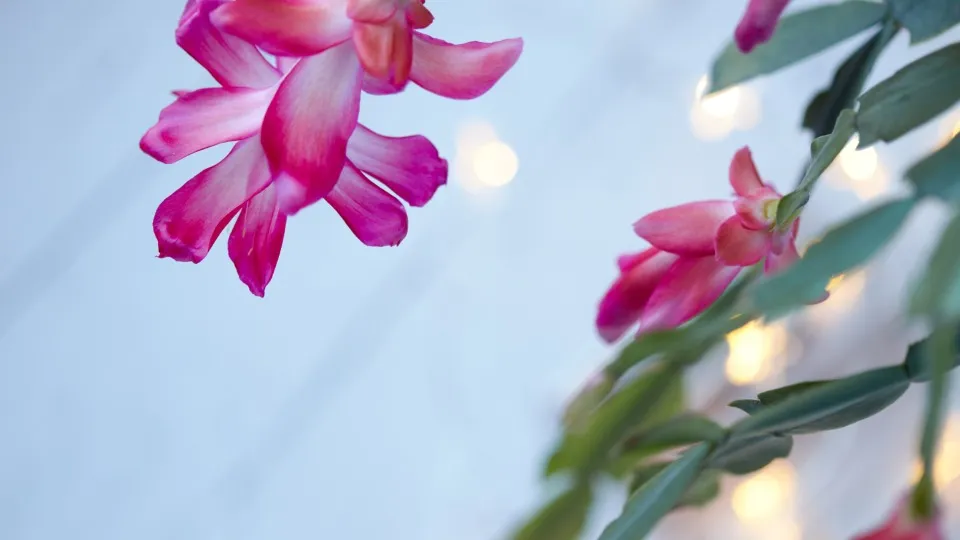
Christmas Cactus Care (and Why It Won't Bloom)
Why your Christmas cactus refuses to flower, how to trigger buds with darkness and cool nights, and why the plant you own is probably a Thanksgiving cactus.
Plant Lover Gifts on a Small Budget: 18 Ideas That Get Used
Eighteen small plant gifts that actually get used, grouped by who you are buying for — Secret Santa, a new plant owner, a host — plus what never to buy cheap.
The Best Gifts for Plant Lovers in 2026 (22 Ideas They'll Actually Use)
A plant lover's gift guide sorted by budget, from stocking fillers to a proper splurge — 22 ideas chosen for what people use, not what looks good boxed.