Best Plants
9 Low-Light Indoor Plants That Are Nearly Impossible to Kill
Got a dim room and a history of dead plants? These nine low-light houseplants forgive almost everything — with honest notes on light, water, and pet safety.
In this article
- 1. Snake plant (Dracaena trifasciata)
- 2. ZZ plant (Zamioculcas zamiifolia)
- 3. Pothos (Epipremnum aureum)
- 4. Cast iron plant (Aspidistra elatior)
- 5. Heartleaf philodendron (Philodendron hederaceum)
- 6. Chinese evergreen (Aglaonema)
- 7. Peace lily (Spathiphyllum)
- 8. Parlour palm (Chamaedorea elegans)
- 9. Spider plant (Chlorophytum comosum)
- Quick comparison
- Three things that matter more than the plant you choose
If you have killed a plant in a dark apartment and concluded that you are simply not a plant person, we would gently suggest a different explanation: you picked a plant that needed more light than your room has. That is a matching problem, not a character flaw, and it is entirely fixable.
Some plants evolved on the shaded floor of a forest, under a canopy, in light that never gets bright. Those are the ones you want. Below are nine of them — genuinely forgiving, widely available, and happy in the kind of corner where a fiddle-leaf fig would sulk and die. Every plant on this list appears on at least one university extension or RHS list of shade-tolerant houseplants; we have not invented any of these recommendations, and where the guidance is specific we have linked where it comes from.
1. Snake plant (Dracaena trifasciata)
The one we recommend most often, and the hardest to kill on this list. Stiff upright leaves, architectural enough to look deliberate in a bare corner, and almost aggressively indifferent to neglect. It stores water in its leaves, so a fortnight of being forgotten is a normal Tuesday for it.
- Light: anything from low to bright indirect. Grows faster in brighter light, survives quite happily without it.
- Water: every two to three weeks, and less in winter. Let the soil dry out completely in between.
- Watch for: soft, mushy leaf bases. That is overwatering, and it is the only realistic way to lose one of these.
- Pets: the ASPCA lists snake plants as toxic to cats and dogs.
2. ZZ plant (Zamioculcas zamiifolia)
Glossy, deep-green, almost artificial-looking leaves on upright stems. Underground it grows potato-like rhizomes that hold water, which is why it copes with being forgotten so well. If you travel, this is your plant.
- Light: low to moderate indirect. Tolerates fluorescent office lighting, which tells you something.
- Water: every two to three weeks. When in doubt, wait another week.
- Watch for: yellowing lower leaves, which here almost always means too much water rather than too little.
- Pets: listed as toxic to cats and dogs by the ASPCA.
Iowa State University Extension puts its comfortable range at roughly 59–75°F (15–24°C) and is clear that it prefers to be kept on the dry side — let the mix dry out properly before watering again.
3. Pothos (Epipremnum aureum)
The trailing vine you have seen on top of every bookshelf, and deservedly so. It grows quickly enough to feel rewarding, roots from cuttings in a glass of water, and tells you clearly when it wants a drink by drooping — then perks back up within hours once you oblige.
- Light: low to bright indirect. Variegated types keep more of their pattern in brighter spots and go greener in dim ones.
- Water: roughly weekly; let the top inch or two dry first.
- Watch for: long bare stems with leaves only at the tips — that is a request for more light.
- Pets: toxic to cats and dogs per the ASPCA.
One honest caveat on the “low light” billing: University of Wisconsin Horticulture notes pothos does best in filtered light and warmth, and merely tolerates a wide range of conditions. It will live in a dim corner. It will grow noticeably better a few feet from a window.
Hanging planters for trailing plants(affiliate link, opens in a new tab)Pothos looks best where it can actually trail.4. Cast iron plant (Aspidistra elatior)
Named for exactly the reason you would guess. It was a Victorian parlour staple in an era of gas lamps and poor light, and it has not become any more demanding since. Broad, dark, strappy leaves on a plant that asks for essentially nothing.
- Light: genuinely low. One of the few here that is content in a north-facing hallway.
- Water: every two to three weeks. It grows slowly and drinks accordingly.
- Watch for: very little. Its main flaw is that it grows so slowly you may forget you own it.
- Pets: the ASPCA does not list it as toxic to cats or dogs.
5. Heartleaf philodendron (Philodendron hederaceum)
Softer and more velvety than pothos, with tidier heart-shaped leaves. It trails or climbs, forgives an erratic watering schedule, and copes with dim corners better than most vines.
- Light: low to bright indirect.
- Water: weekly-ish, once the top inch has dried.
- Watch for: crispy brown leaf edges, usually a sign the soil has been dry too long.
- Pets: toxic to cats and dogs per the ASPCA.
6. Chinese evergreen (Aglaonema)
The one to buy if you want colour without needing light for it. Chinese evergreens come in silver, cream, and deep pink varieties, and the patterned foliage does the decorative work that a flower normally would.
- Light: low to moderate indirect. The darker green varieties handle the dimmest spots; the pink ones want a little more.
- Water: every one to two weeks, when the top inch is dry.
- Watch for: it dislikes cold. Keep it away from drafty doors and away from anything below about 60°F (15°C).
- Pets: toxic to cats and dogs per the ASPCA.
7. Peace lily (Spathiphyllum)
The only plant here that reliably flowers in modest light — white spathes above glossy dark leaves. Its real gift to a nervous beginner is honesty: it wilts theatrically when thirsty and recovers within a few hours of watering, so it tells you exactly what it needs.
- Light: low to moderate indirect. Direct sun scorches the leaves.
- Water: weekly, or whenever the dramatic wilt begins.
- Watch for: brown leaf tips, often a response to tap water or to letting it dry out fully. Try filtered or left-to-stand water.
- Pets: toxic to cats and dogs per the ASPCA.
8. Parlour palm (Chamaedorea elegans)
A small, feathery palm that brings height and softness without needing the bright conditions most palms demand. Another Victorian favourite, for the same low-light reasons as the cast iron plant.
- Light: low to moderate indirect. Direct sun burns the fronds.
- Water: keep the soil lightly moist but never soggy — roughly weekly.
- Watch for: spider mites, which like the dry air of a heated room. Check the undersides of the fronds now and then.
- Pets: not listed as toxic to cats or dogs by the ASPCA.
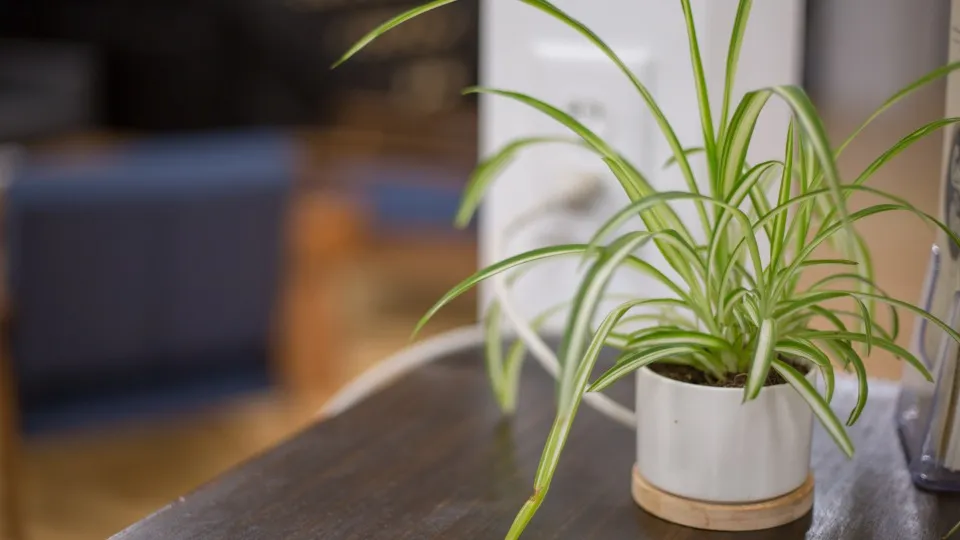
9. Spider plant (Chlorophytum comosum)
The arching, striped classic that throws out baby plantlets on long stems, each of which can be potted up into a new plant. It prefers a moderately bright spot, so it is the most light-hungry entry here — but it tolerates less, and it is so cheerful and so easy to propagate that it earns its place.
- Light: moderate indirect ideally; copes with low, though it will produce fewer babies.
- Water: weekly, keeping the soil lightly moist.
- Watch for: brown tips, commonly linked to fluoride and chlorine in tap water. Filtered or stood-out water helps.
- Pets: not listed as toxic to cats or dogs by the ASPCA.
Quick comparison
| Plant | Light needed | Water | Pet-safe (ASPCA) | Best for |
|---|---|---|---|---|
| Snake plant | Very low → bright | Every 2–3 weeks | No | The hardest corner in the house |
| ZZ plant | Low → moderate | Every 2–3 weeks | No | People who travel |
| Pothos | Low → bright | Weekly | No | Shelves and fast rewards |
| Cast iron plant | Genuinely low | Every 2–3 weeks | Yes | Dark hallways |
| Heartleaf philodendron | Low → bright | Weekly | No | Trailing, softer look |
| Chinese evergreen | Low → moderate | Every 1–2 weeks | No | Colour without light |
| Peace lily | Low → moderate | Weekly | No | Flowers, and clear signals |
| Parlour palm | Low → moderate | Weekly | Yes | Height and softness |
| Spider plant | Moderate → low | Weekly | Yes | Free plants for friends |
Three things that matter more than the plant you choose
Drainage. A pot without a drainage hole is the most common way a low-light plant dies, because dim conditions already slow how fast soil dries out. If the planter you love has no hole, leave the plant in its nursery pot and drop that inside.
Watering less than you think. This is the rule that changes everything in a dim room. Less light means slower growth, which means slower water use. A plant that wanted weekly water by a bright window may want it fortnightly in a corner. If you take one habit from this article, make it checking the soil before watering rather than watering on a schedule. Get this wrong and the first sign is usually yellowing leaves — our guide to what that means walks through how to tell overwatering from the alternatives.
Rotating the pot. A quarter turn whenever you water keeps growth even instead of leaning hard toward the nearest window.
Frequently asked questions
What is the easiest low-light plant for a complete beginner?
A snake plant or a ZZ plant. Both store water internally, both tolerate weeks of neglect, and both fail only if you water them too often — which means the beginner instinct to fuss is the one thing to resist.
Can indoor plants survive with no natural light at all?
No. Every plant on this list needs some light to photosynthesise. In a windowless room your options are a grow light or an artificial plant, and there is no shame in the second.
Why is my low-light plant getting leggy?
Long stems with widely spaced leaves are a plant stretching toward a light source. It is not a watering issue. Move it a few feet closer to the window, or add a grow light for a few hours a day.
How often should I water plants in a dark room?
Less often than the label suggests, because labels assume good light. Check the top inch or two of soil with your finger and water only when it is dry. For most plants here that lands somewhere between weekly and every three weeks, and it will stretch out further in winter — see winter houseplant care.
My low-light plant has yellow leaves. What is wrong?
In a dim room, overwatering is the first thing to rule out, since the soil stays wet far longer than it would by a window. Our yellow leaves troubleshooting guide walks through the other six causes in order.
Before you go — grab the cheat sheet
Water, light, and every common fix on one printable page. Free.
No spam, ever. Unsubscribe in one click.
Keep reading

The Best Pots for Houseplants (and the Gravel Layer You Should Skip)
Terracotta, plastic or glazed ceramic — which pot suits which plant, what size to buy, and why the gravel in the bottom is making drainage worse.

The Best Grow Lights for Houseplants (and How Far Away to Hang Them)
There is no single best grow light — there are three setups for three situations. How to pick, plus the distance and hours that actually make one work.

Winter Houseplant Care — What to Change, and What to Leave Alone
Most houseplants die in winter from too much care, not too little. What to change when the heating goes on, what to stop doing, and what to leave alone.